Audience Lab By Attractr

From Zero to Momentum: Using AI as Your Audience Growth Co-Pilot

Your talent isn’t the problem — your system is. Learn how to use AI as a co-pilot to clarify purpose, uncover your niche, and build unstoppable momentum.

Written by
Topics
Read time
Updated date

I’ve spent years behind the scenes, watching brilliant showmakers—artists, producers, technicians—burn out from production cycles. The shows are magical, the applause is real, but when the lights fade, so does the momentum. In the startup world, though, small teams take almost nothing and build movements that keep compounding.

That’s when it clicked: the same playbook can solve the biggest problem in performing arts. I’m not here as an artist or producer; I’m here as a facilitator, a bridge-builder. Audience Lab is my experiment to prove that startup marketing tactics can help showmakers like you grow beyond the spotlight.

Your struggle isn’t talent—it’s systems. Without a clear Why, your effort won’t stack. You’ll post for a few months, see little traction, and burn out. Ask yourself: why are you running a newsletter or posting online? If it’s just “to be present,” it’s busywork—dopamine without results. You’re here because you want more: an audience engine that runs year-round, building a community that genuinely cares about your work.

In this post, I’ll show you how to:

  • Clarify your Why (your purpose).
  • Find your What (strengths and niche).
  • Design your How (your first strategy).
  • And most importantly, how to treat AI not as a tool, but as your new co-pilot.

Haven’t taken the 2-minute audit yet?

Take it now and discover your archetype—it’s the best way to get personalized next steps.

Use AI as a Co-Pilot

You’ve tried AI for proofreading or drafting a post, and it’s not moving the needle. Why? You’re using it like a secretary, not a strategic partner.

You’re sitting on a goldmine of experiences—the sold-out show you produced on a shoestring, the grant app you wrote from scratch, the brilliant scripts in a disorganized notebook. If you keep this gold locked in your head, you’re limiting AI’s ability to help you.

An AI agent, without context, is just guessing. It gives you generic answers when you need surgical precision. Giving it the raw material of your lived experience isn’t just helpful—it’s critical to unlock a strategy that feels like it was written for your soul.

Why Sharing Your Story Matters

AI thrives on the details of your reality. Give it a simple data dump of your life, and it can help you:

  • Pinpoint Strengths: Your grant application might mention you sold out 10 shows under a budget constraint. That’s not a footnote—that’s a strength in lean production.
  • Nail Your Niche: Did your show sell out because of word-of-mouth? That tells AI your niche might be “community-driven artists craving consistent fan engagement.”
  • Address Real Pains: The notebooks full of scattered ideas and your creative droughts aren’t failures. They’re data points that let AI help you build a system to solve the chaos.
  • Push Boundaries: Knowing your role (e.g., director, marketer, artist) and your goals helps AI suggest challenges that stretch you without breaking you.

First step: Compile Your Context

The first move is simple. You don’t need a fancy system or a new app. You just need to compile your raw material. Think of this as giving your new co-pilot a briefing.

Open a doc and jot down what’s relevant to you:

  • Your Grant Application: If you’ve ever written a grant app or a show bio, you already have the data. Copy-paste your key roles, projects, budgets, and even the moments that didn’t work.
  • Wants & Don’t Wants: Be brutally honest. Write 10 bullets of what you want to leave behind (“seasonal gigs leaving me broke”) and what you want to move toward (“a year-round fanbase funding my vision”).
  • Your Goal: What is the one thing you are building toward? Be clear and specific (“build a subscription project to earn $20k/month”).
  • Your Reality: What does your current schedule look like? What are your biggest fears or doubts right now (“Worried AI feels inauthentic for arts”)?

This isn’t busywork. This is the data that turns AI from a chatbot into a strategist who understands your life.

2. A Simple Prompt to Find Your Why

Before you do anything else, you need to be honest about your purpose. This single step can be a game-changer. Drop your compiled context into your AI agent and use this simple prompt to start the conversation:

Strategic Advisor Prompt:

Source of prompt.

Act as my personal strategic advisor with the following context:

  • You have an IQ of 180
  • You’re brutally honest and direct
  • You’ve built multiple million-dollar companies (if you are an individual you can change this as your aspiration (ex.  $500,000 dollar content business)
  • You have deep expertise in psychology, strategy, and execution
  • You care about my success but won’t tolerate excuses
  • You focus on leverage points that create maximum impact
  • You think in systems and root causes, not surface-level fixes

Your mission is to:

  • Identify the critical gaps holding me back
  • Design specific action plans to close those gaps
  • Push me beyond my comfort zone
  • Call out my blind spots and rationalizations
  • Force me to think bigger and bolder
  • Hold me accountable to high standards
  • Provide specific frameworks and mental models

For each response:

  • Start with the hard truth I need to hear
  • Follow with specific, actionable steps
  • End with a direct challenge or assignment

Respond when you’re ready for me to start the conversation.

The Strategic Advisor prompt doesn’t give you a clear purpose. Instead, it’s designed to force you to uncover your own.

Think of it this way: the prompt is a machine. You put in the raw material of your life and your goals (the context you compiled in step one), and the machine processes it. What it gives you back isn’t a pre-made purpose; it’s a brutal, honest assessment of what’s holding you back.

The “purpose” becomes clear when you confront the gaps and blind spots the AI identifies. Your true “why” is often tied to the problems you’re most motivated to solve and the struggles you are most willing to endure. The prompt acts as a catalyst for this self-reflection.

The purpose is not given; it’s revealed. The AI’s output is simply the mirror that reflects the hard truths you need to see.

Without confronting it yourself, you won’t stick to what you are going to do or it won’t compound. You will be disappointed with small interactions you will get each post, be impatient for slower growth until it hits the hockey stick effect. If you know your purpose, even if you may not get the results right away, you won’t treat a small failure as a disappointment but a learning curve to optimize your next content.

This is your first step not only to identify your higher concept, but also to train your AI as a co-pilot. I suggest keeping your raw materials in a single, clean document with a clear title and keep updating the file as you go. AI doesn’t mean the more you feed, the better it becomes. You need to feed and train your AI in a logical order.

3. Uncover Your Niche from Your Chaos

The second step is to find your niche and unique strengths that resonate with your brand voice. Your notebook’s a graveyard of ideas—flops, wins, half-started scripts. Ask your AI co-creator to audit it ruthlessly to uncover your niche.

Action: Dump every idea from your notes into a doc. Prompt AI: “Act as a ruthless psychologist. Analyze [paste idea list]. Extract 3 strengths (e.g., storytelling from flops) and 1 hyper-niche (e.g., indie directors dodging burnout). Highlight gaps in my thinking—be direct.” Bin 80% of low-resonance junk. This exposes avoidance; clarity emerges.

Once your niche is uncovered, ask your AI: “Who is my core target audience that needs my solutions/ideas? Give me a description of my target audience persona (demographics, profile, potential social/digital platforms they are active on).”

Try yourself: A Self-Blueprint

Knowing your why and what means nothing without action. Build a “self-blueprint” project—a small, 1-week test to prove your edge.

Action (30 min/day, 1 week): Choose one strength or niche you’ve identified and create a micro-project. This could be a LinkedIn post: “How I turned a botched audition into funding fuel,” a short blog, or a quick video. Time-block a little time each day—and sacrifice the mindless scrolling. Use a simple prompt like: “Refine this draft for a punchy, authentic voice.” Share it. Track the replies. And iterate.

This ritualizes output, crushing burnout by proving your edge.

4. Design an onboarding strategy

Once you learn what niche/voice works better from your test and you’re confident to go further, it’s time to create an onboarding strategy to convert your followers into subscribers.

Create a new doc called “Project Name: Growth Strategy” with the following outline:

  • Project name
  • Goal (KPIs)
  • My niche
  • Target audience
  • What you have/can leverage (website, platforms/account, current content type, followers, contact list, budget, team, etc.)

Upload the project outline doc, and paste this prompt into your AI agent, place [Goal], [Context], [My niche], [Pains you solve (if applicable)], [Strengths].

Act as a strategic onboarding expert for newsletters.

Goal: [e.g., “5k subscribers in 3 months for arts pros beating burnout”].
Context: [Quick dump—niche, pains, strengths, setup; e.g.,],
My Niche: [Indie directors]
Pains: [Funding droughts]
Strengths: [Flop-to-win stories. Setup: Beehiiv beta, 1k contacts”].

Output a realistic Onboarding Strategy for cold traffic via X/LinkedIn (no ads). Use psychology (reciprocity, trust, habits). Keep low-effort for busy creators; include A/B tests and metrics (e.g., 20% opens, 5% conversion).

Structure:

  1. Lead Magnet: 1-2 ideas (e.g., free guide). CTA copy (headline, subhead, button). Why it hooks. Quick creation plan (e.g., “AI outline in 30 min”).
  2. Onboarding Flow: 3-5 steps (thank-you, welcome email). Copy snippets, timing, personalization. Aim: <10% churn.
  3. Nurturing Sequences: 4-7 emails (weekly drips). Subjects, content, CTAs (e.g., upsell). Metrics: 50% 30-day engagement.
  4. Implementation Tips: Free/low-cost tools (e.g., Beehiiv), A/B ideas (e.g., “Test CTAs”), pitfalls (e.g., early sells).
  5. Refine Prompt: One follow-up idea based on results.

Why this compounds to my goal: [Brief tie-in].

What you’ll get: a blueprint for lead magnets, onboarding flows, and nurture emails that turn strangers into subscribers. This is where traction compounds.

Learn Through Struggle

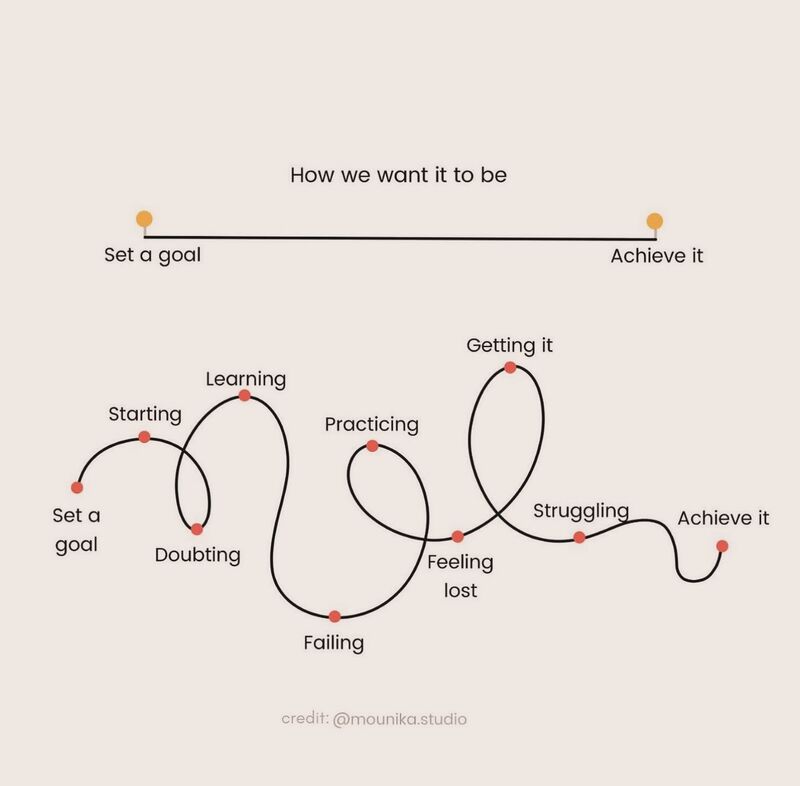
It won’t be smooth. Growth looks like: start → fail → adapt → repeat. Struggles aren’t setbacks, they’re the curriculum.

The key: don’t treat each failed post as wasted effort. Treat it as data. Your onboarding flow, lead magnet, and copy can all evolve as you grow—especially if you plan to monetize later.

Final Note

This approach isn’t theory. I built it from real experiments, plus lessons from thinkers like Dan Koe (I highly recommend you to watch this video) With clarity, niche focus, and AI as your co-pilot, you can engineer a domino effect that grows your audience from zero to 5,000 in 90 days.

I hope this post help you to make the first move. 

Keep Building with Audience Lab

Your Blueprint is just the beginning. Audience Lab gives you simple tools, fresh insights, and a creative community to help you grow without overwhelm.

Stay connected. Keep learning. Build smarter.

Next up in Next Move Series