Your Restart Runner diagnosis: Break the reset cycle, overcome burnout and sporadic engagement, with a 6-step blueprint for sustainable momentum.
You’re deeply invested in your craft—whether you’re producing shows, running a company, or pursuing independent creative work. You’ve built a website, maintained social channels, sent newsletters, and maybe even experimented with digital ads.
But once the curtain closes, it feels like everything resets.
There’s no carryover from one project to the next. The audiences you worked so hard to attract don’t seem to return or you are not attracting new and scaling consistently from the previous project. And despite how much you’re doing, you’re not building momentum.
If that resonates, you’re not alone. You’re a Restart Runner—who caught in the “reset cycle.” You’re putting in the effort, but not seeing compounding returns. You’re stuck in the Minimum Effective Dose (MED) zone of audience building: active, but not strategic.
This post is designed to help you break that cycle—not by working harder, but by working smarter, optimizing what you already have. It’s a proven, step-by-step blueprint to transition from fragmented marketing to an audience growth engine that actually compounds over time.
Haven’t taken the 2-minute audit yet?
Take it now and discover your archetype—it’s the best way to get personalized next steps.
There’s no shortage of advice in the creator economy. Every week, it seems there’s a new AI growth hack or viral content framework promising 10x results. But the problem isn’t the availability of tactics—it’s knowing how to apply them strategically to your situation.
For years, performing arts creators could get by on word-of-mouth, community support, and public funding. But post-pandemic, the industry landscape has fundamentally changed:
Operating costs are up 35–41% since 2019.
National audience turnout remains 46% below pre-pandemic levels.
Philanthropic giving has declined by over 45%.
Government funding has stagnated, reducing real purchasing power.
Over 40% of theaters are at risk of closure without funding (next 5 years)
In short: relying on the industry to support your growth is no longer viable. You need to build your own audience system—one that sustains your creative work financially and culturally.
Sources:
As a Restart Runner, your goals aren’t superficial. You’re not chasing virality or overnight fame. You want a sustainable system that supports your artistic vision. That likely includes:
Generating consistent income from your creative practice.
Establishing digital credibility to attract grants, residencies, or partnerships.
Building anticipation for your work—before it’s even announced.
Creating a community of fans and collaborators that grows with each project.
The challenge isn’t desire or talent. It’s infrastructure. Most Restart Runners already have a compelling story, artistic voice, talent and expertise, and community—what’s missing is a system that turns one-off attention into long-term engagement.
Despite all the activity, many Restart Runners find themselves spinning their wheels. Here’s why:
Inconsistent output: Marketing happens only when a show is live, creating gaps in engagement.
Fragmented messaging: Efforts are spread across channels with no clear focus or call to action.
No repeatable formats: Without a consistent content structure or style, there’s nothing for audiences to latch onto.
Overload: As a one-person operation, it’s hard to sustain momentum or build systems while juggling everything else.
Traditional models of marketing tell us to “do perfect” for every launch. But modern startup methods tell a different story: start small, iterate fast, and build systems that scale.
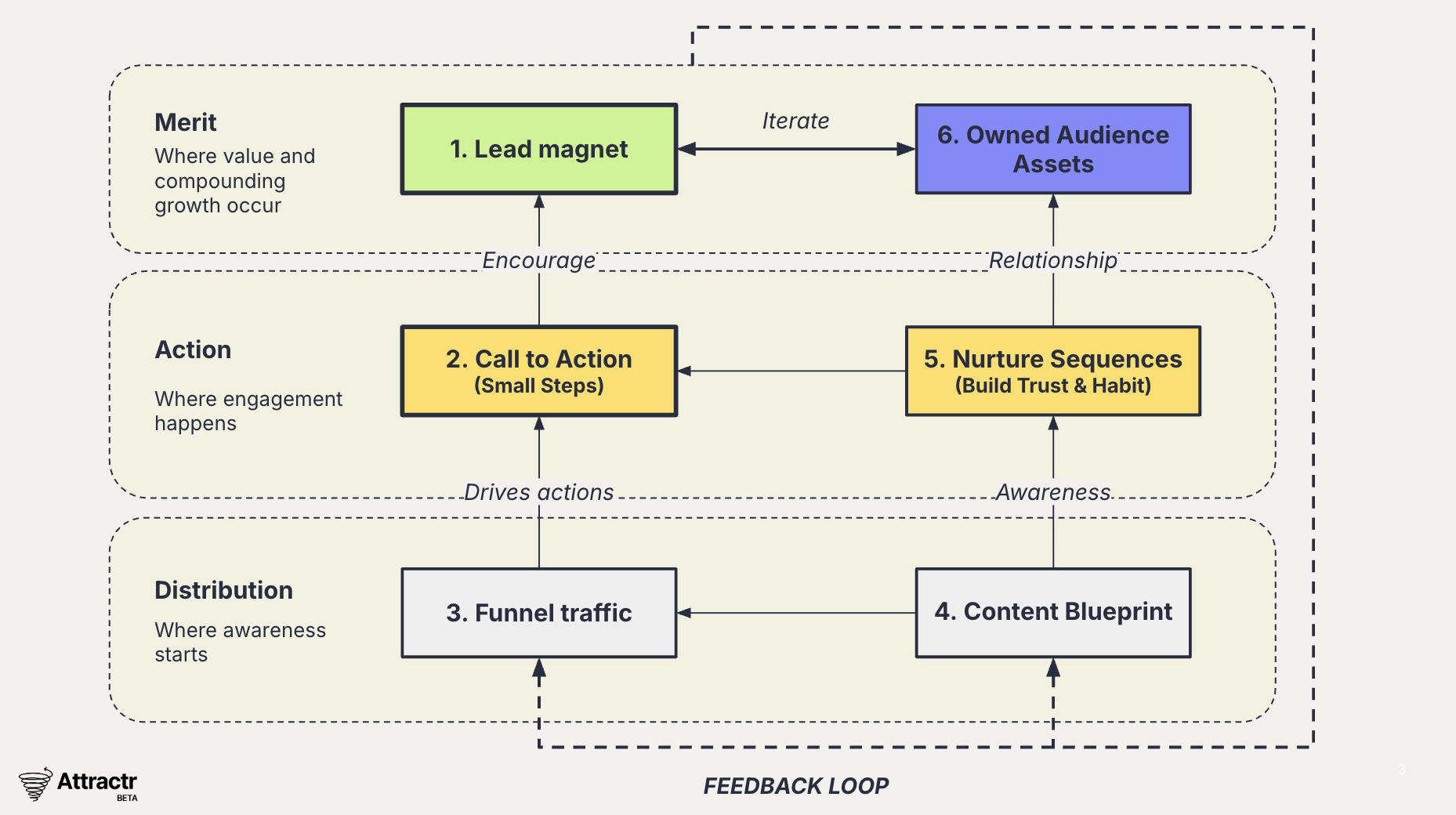
Here’s a simplified but strategic framework that works for Restart Runners. Think of it not as a viral formula, but as an audience growth loop—one that turns attention into loyalty, and loyalty into long-term results.
Start by offering a free, high-value resource in exchange for a follow, email address, or opt-in. This is your entry point into a deeper relationship with your audience.
Examples:
“Get early access to my next production”
“Join my behind-the-scenes email series”
“Watch my 5-minute video: Lessons from launching a one-person show”
Why it works: This encourages small but meaningful action from new audience members—without pressure or hard sells.
Pro tip: If you already have a list, create a new lead magnet to re-engage them.
Many creators or marketers make the mistake of promoting tickets or merch right away. Instead, focus on micro-commitments—calls to action that invite a light-touch next step.
Ditch the generic “Sign up for my newsletter.” and craft a CTA copy for a lead magnet.
Example:
Curious about my next show? Get weekly inside access.
Why it works: The goal is not to sell right away, but to build trust through meaningful, repeated engagement.
Focus your social bios, posts, and videos on one active lead magnet at a time. Don’t scatter your links or CTA across multiple initiatives. Point your audience to one next step.
Why it works: Concentrated effort produces clearer outcomes. This is how startup marketers reduce friction and increase conversion.
Create 2–3 consistent themes, or focus areas/topics for your social content that naturally support your lead magnet. Your content should inform or tease what your lead magnet delivers.
Examples:
Creative process updates
Lessons from recent shows
Audience questions and replies
Use one or two platforms that work best for you. It’s not about being everywhere—it’s about being effective somewhere.
Why it works: Regular content tied to a consistent CTA trains your audience to engage, return, and share.
Don’t disappear after someone signs up. Let subscribers know what to expect and how often. Your newsletter can be short, simple, and personal—it doesn’t need to be a formal update.
Send a weekly email about your process.
Share a behind-the-scenes photo or video.
Offer a reflection or journal-style note.
Why it works: Relationship-building happens through rhythm and consistency. You don’t need perfect content—just real, repeatable content.
Once you update your website CTA, place it across your social or digital properties, and have an idea for content themes / topics, then first you send a newsletter to existing subscribers to inform of the new program.
Your email list is more than just a distribution tool—it’s an asset. Social media reach is unreliable and controlled by algorithms. Your email or SMS list is where long-term value lives.
Even 100 deeply engaged subscribers can outperform 10,000 passive followers.
Why it works: Owned audiences are portable, resilient, and long-term. They form the backbone of your sustainability.
You’ve seen the system. Now here’s how you can bring it to life—without duct-taping half a dozen tools together.
Attractr was built specifically for performing arts creators who want to stop starting from zero and start building a loyal, engaged audience that grows with them. Think of it as your operating system for the blueprint you just mapped out.
Here’s how Attractr supports each step:
Your Attractr Live Room becomes your lead magnet in action. You can offer audiences free access to a behind-the-scenes live episode, an open rehearsal, or a special Q&A episode related to your show. In exchange, they join your Live Room (free and paid member) no extra landing page or tech needed.
It’s the easiest way to say: “If you’re curious, come closer.”
And once they’re in, you can start delivering your nurture sequence through automated emails and real-time conversations.
Use the Live Room as a recurring invitation to peek inside your process, not just your performance.
With Attractr, you’re not building a siloed list on your own. When you give cast members, co-creators, and partners a Team permission, their Live Room will be aggregated into the organizational database.
Everyone who signs up associated Live Rooms —is added to your Member Dashboard. Over time, this becomes your owned audience asset: searchable, segmentable, and collaborative.
Audience building becomes a team sport—not a solo hustle.
Attractr isn’t just a tool—it’s a content engine. Every show on the platform has a built-in show page, where your Live Room, visuals, show schedules, and ticket information live together. Instead of scattering content across platforms, you can theme your content around the world of your show—and funnel traffic directly to where the action is.
It’s not just about shouting louder on social media. It’s about inviting people into a world you’ve designed—and giving them a reason to stay.
Your show becomes more than an event. It becomes the source of your audience flywheel.
The shift from restarting to compounding doesn’t begin with doing more. It starts with building smarter—systematizing what’s already working, and cutting what’s not.
Attractr gives you that system.
It’s where you capture attention, build real relationships, and grow trust—all in one place, show after show. No more starting from scratch. No more burnout.
We will be opening up early access to our private beta for creators like you who want to test, shape, and grow with us.
Your Blueprint is just the beginning. Audience Lab gives you simple tools, fresh insights, and a creative community to help you grow without overwhelm.
Stay connected. Keep learning. Build smarter.
Why Building an Audience Engine is the Only Path Forward for Performing Arts …

Your talent isn’t the problem — your system is. Learn how to use AI as a co-pilot to clarify purpose, uncover your niche, and build unstoppable momentum.

Your System Builder diagnosis: Overcome growth plateaus and generic engagement with 4 steps to smarter systems, AI workflows, and vibe marketing.

Your legacy doesn’t end when the spotlight fades. For seasoned artists, the digital world isn’t about chasing trends—it’s about turning your story, your wisdom, and your community impact into something lasting.

Your Digital Drifter diagnosis: Fix one-way engagement and conversion gaps with a 4-step blueprint, feedback loops, and vibe marketing for real dialogues.

Your Restart Runner diagnosis: Break the reset cycle, overcome burnout and sporadic engagement, with a 6-step blueprint for sustainable momentum.